

Komorebi project, 2025
Design, modelling, lighting and rendering: Rina Osipova
Software and AI: 3ds max, Corona Renderer, Nano Banana, Stable Diffusion
Project type: Non-commissioned CGI interior visualisation study
Bathroom / Details & Materials
These sheets present the main objects, materials and colour palette of the project.
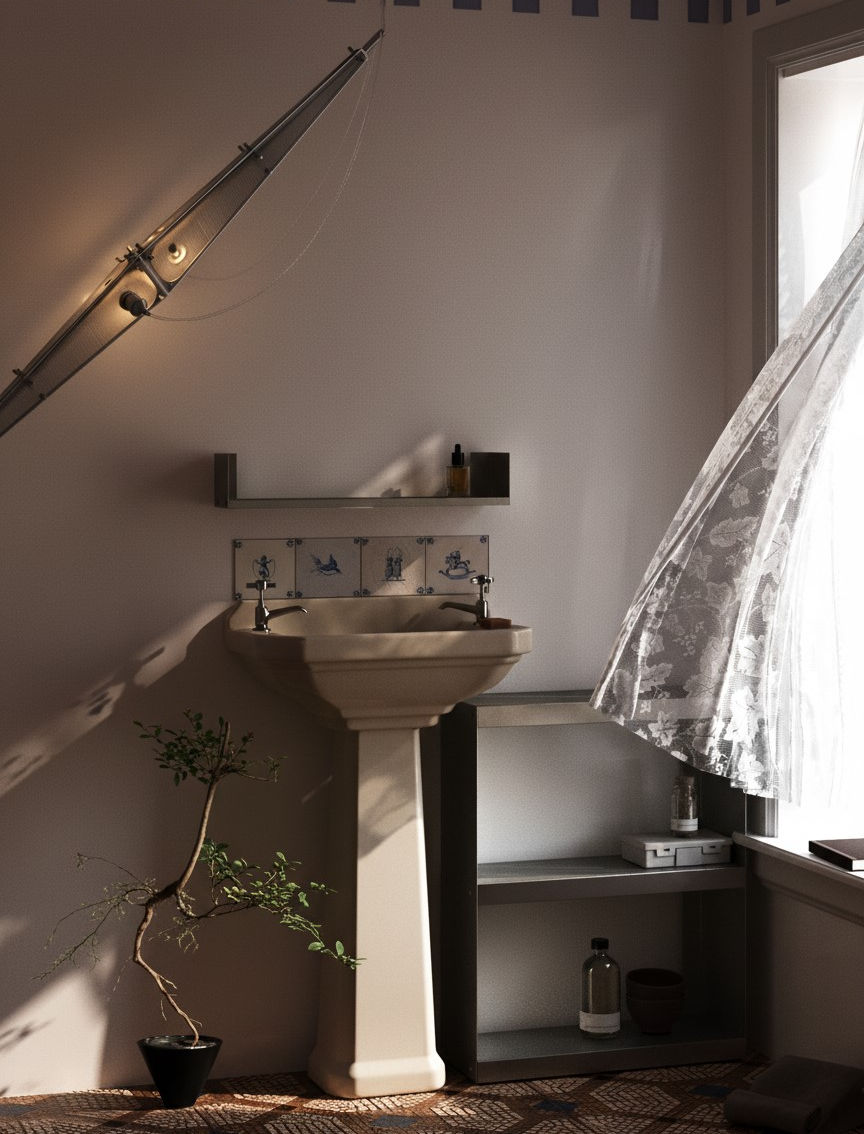
I wanted the bathroom to feel like a tactile space where every detail supports the atmosphere: painted plaster, patterned mosaic floor tile, porcelain basin, chrome fixtures, metal shelving, lace sheer curtain and decorative ceramic tiles.


Plant Integration
Process: source object → empty render → final integration
In this process, I used Nano Banana as an assisting tool to explore the plant’s shape and integration into the scene. The object was then manually refined and placed into the final CGI image.
I wanted the plant to feel less like an added asset and more like a living part of the room, supporting the composition, light and quiet inhabited atmosphere.


Integration of the Fragment#01/02, a pendant lamp designed by Sing Chan for SINGCHAN. The piece combines stainless steel, brass, and precision-cut glass, creating layered refractions and a contrast between delicate transparency and exposed structural details. The object was textured in 3ds Max, with separate light states, close-up material details, and a viewport preview showing its placement and lighting setup before the final Corona render


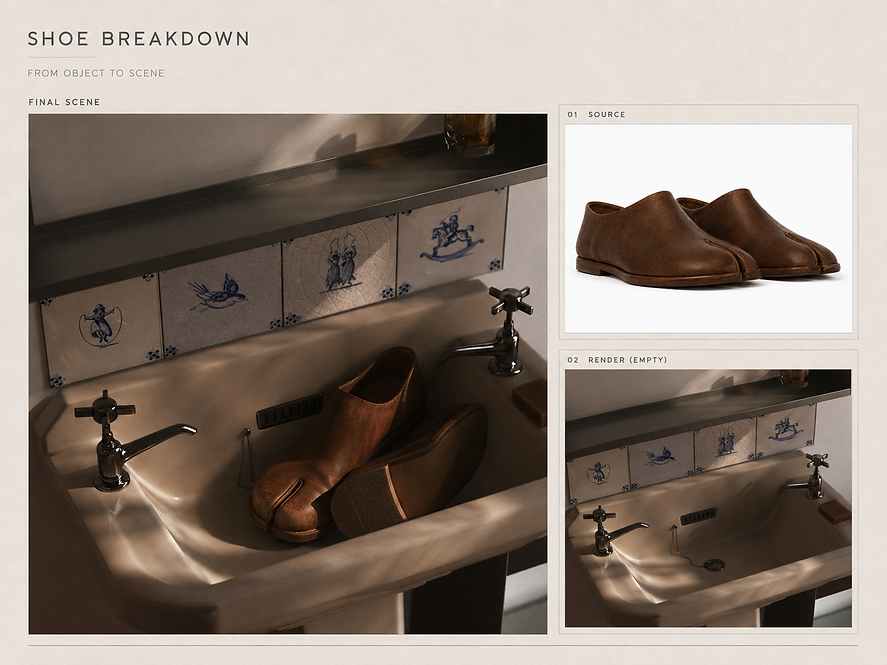
Maison Margiela Tabi shoes were created in Nano Banana and integrated into the final 3D scene. The focus is on matching the object’s scale, leather texture, worn details, and shadow interaction within the sink composition
The reference brush was recreated and placed into the sink scene. The object was generated in Nano Banana, then integrated with attention to scale, wet surface details, foam, and soft shadow interaction to make it feel natural within the final Corona render.


